Reflect, Refresh (or just eat cheese?)
Performance In Mind January 2026 newsletter

Reflect and Refresh
It is tempting to start a new year with a handful of goals and lots of resolutions. They usually tend to fail by mid Feb (we tested this many moons ago when I worked for a fitness chain by pulling the data when we saw a significant drop off in attendance – it was around February 21st) and as habits need at least 2 months to bed in (research from UCL found on average it is 66 days to build a new habit) then we need a better process than setting some ambitions, diving on in and hoping something sticks.
A better approach to use is to look back over the last year, analyse it and tweak. We ask:
What did I do well?
What could I have done better?
What will I stick with?
What should I change?
What actions will I set?
I did mine for 2025:
Did well:
· Focused on building the BE BRAVE approach into my work for VIP (Very Intelligent Perfectionistic) Athletes.
· Focused on developing more tools for athletes with ADHD.
· Saved £700 by cycling to school each day with my daughter instead of getting the bus. And little one gets to school much more focused because she’s already done some exercise.
· Stayed off alcohol for a whole year (apart from a tiny blip in Lanzarote where I ate Rum and Raisin chocolate not knowing it was actual Rum in there – the smell should have been a clue!)
· Worked on some fun corporate campaigns (Shokz, Adidas, Sail GP and Smart Energy GB)
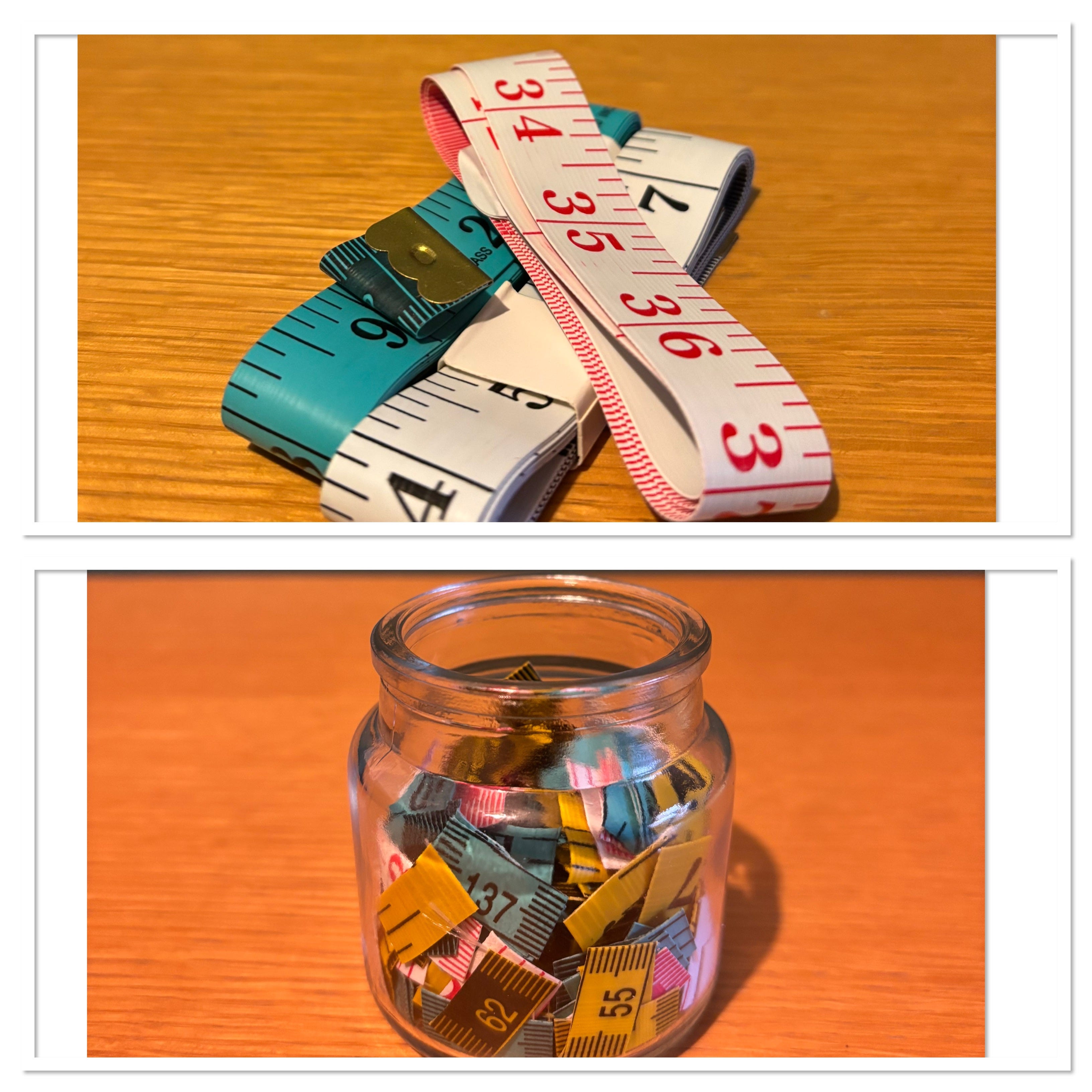
· Got great consistency in triathlon training with at least 3 runs, 3 swims and 3 cycles a week. That adds up to 3 lots of 150 sessions over the year. I started out with three tape measures and every session completed I cut off one cm. The tape measures are no more and my consistency is better.
· Best of all set up the Be Braver Podcast with the very best co-host Annie Emmerson and an amazing Producer Mark Shardlow. They make some thing that could be scary really fun.
Could have done better:
· More activities and engagement in workshops – less talking (from me). They should feel fun, spark curiosity and give lots of lightbulb moments.
· More engagement with my Open Uni students – picking up earlier on those who might be struggling and reaching out sooner – that is my 2026 mission.
· Trying Fly in the IM sets at Swim Club (been too precious about my wonky spine but annoyingly I think they might help – if I survive drowning while trying them!).
· Utilised more athlete voices in my ADHD work – it is the stories of the athletes that have resonated the best.
What will I stick with: I think the best thing to take forward into 2026 is amplifying other’s voices. I have an awesome friend who told me that when a neighbour talked to her about her frustration with immigration in their local area and how it harmed ‘locals’ she didn’t lecture she instead suggested that the neighbour could do something for those locals she thought were disadvantaged by immigration. The neighbour did just that and instead of adding toxicity, added hard work and energy to their local environment by supporting a local youth club. Hopefully with the Be Braver pod we amplify some amazing voices (so far we’ve had Prof Greg Whyte, David Smith MBE, John McAvoy, Lucy Gossage, Kate Silverton, Vassos Alexander, Allie Bailey, Geoff Thomas, Richard Whitehead MBE, Charlie Hodgson, Rebecca Levitt, John Bulleid, Joe Tidy, Liz O’Riordan, Sarah Ruggins, Nikki Freeman, Michael Caulfield, Stef Reid, Mike Bates, Joakim Mortensen, Jaz Turner and Jez Cox) but there are so many others who need to be heard and recognised. That’s my 2026 goal. Send over any people you’d love to see amplified.
What to change: More check ins with the students and the athletes I work with. Be more in their corner.
Action: With the changes and the ‘carry ons’ we can build some exciting goals, but what will make those happen is having amazing habits underpinning them. There is a super cheesy quote that was written on the wall of the dance studio I went to as a kid: “Reach for the moon, even if you miss you’ll still be among the stars.” I love it now because it highlights that when we set stretching goals and put in place all the processes, actions and habits we need to make them happen, even if we don’t hit the goal (because life!) we’ll still be a lot closer than where we would have been without it. So the action is gradually building new habits and processes that support amplifying and supporting others.
On the other hand I asked my husband for his goals: Instead of my 781 words of ramble above his goal is simple and short: Eat more cheese! I’m liking his style.
Sport Psych tool kits
I’ve put together lots of the tools I use in workshops for coaches and athletes and am offering them:
Coaches toolkit:
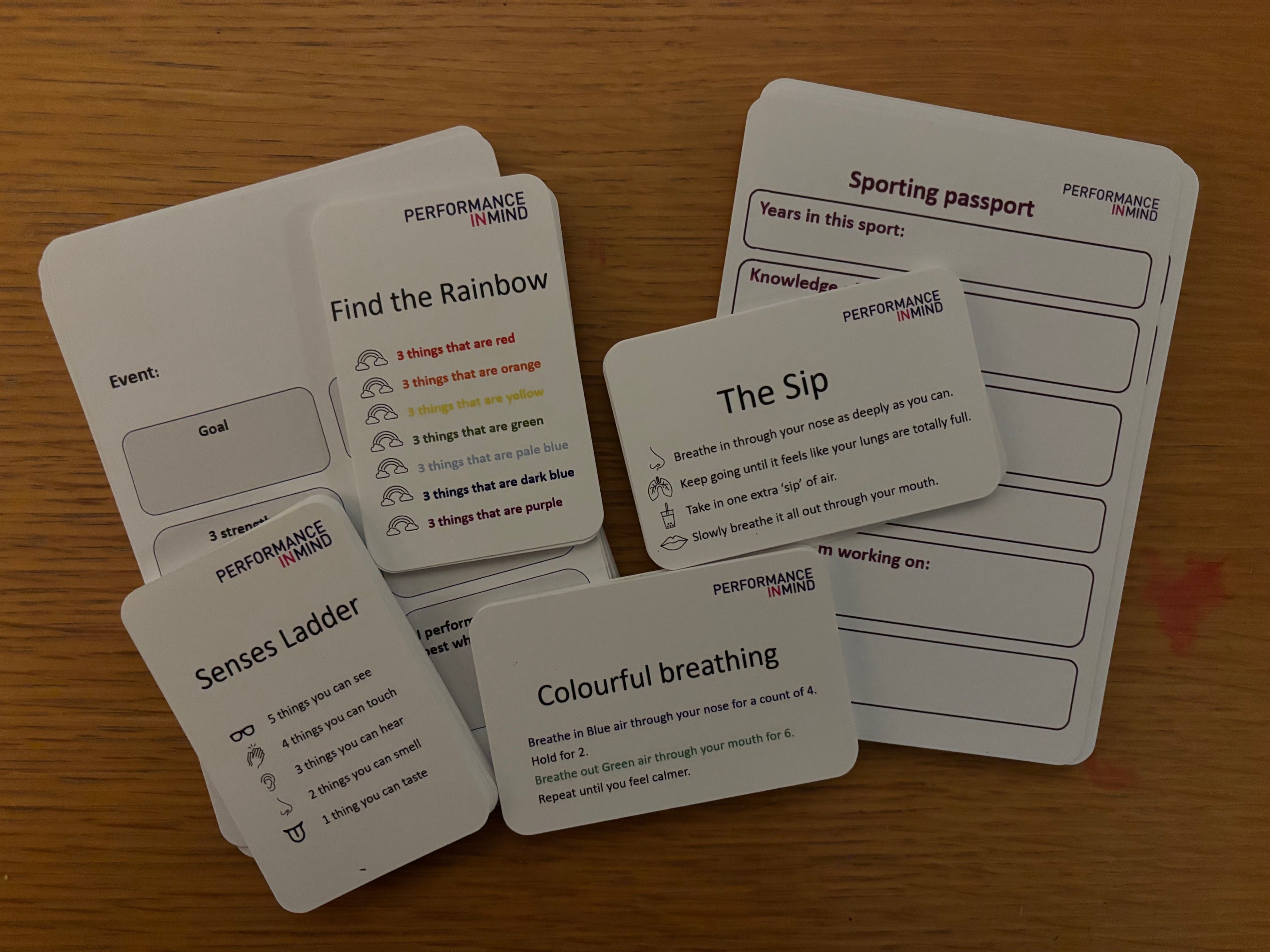
20 Confidence Boosting Cards (for use before competitions)
20 Grounding Cards (to help focus an athlete focused on outcomes)
20 Breathing Cards (to soothe an overwhelmed threat system)
20 Communication Passports (to understand how their individual athletes thrive)
They cost £40 (including UK postage and packaging) and can be bought here:
Athlete toolkit:
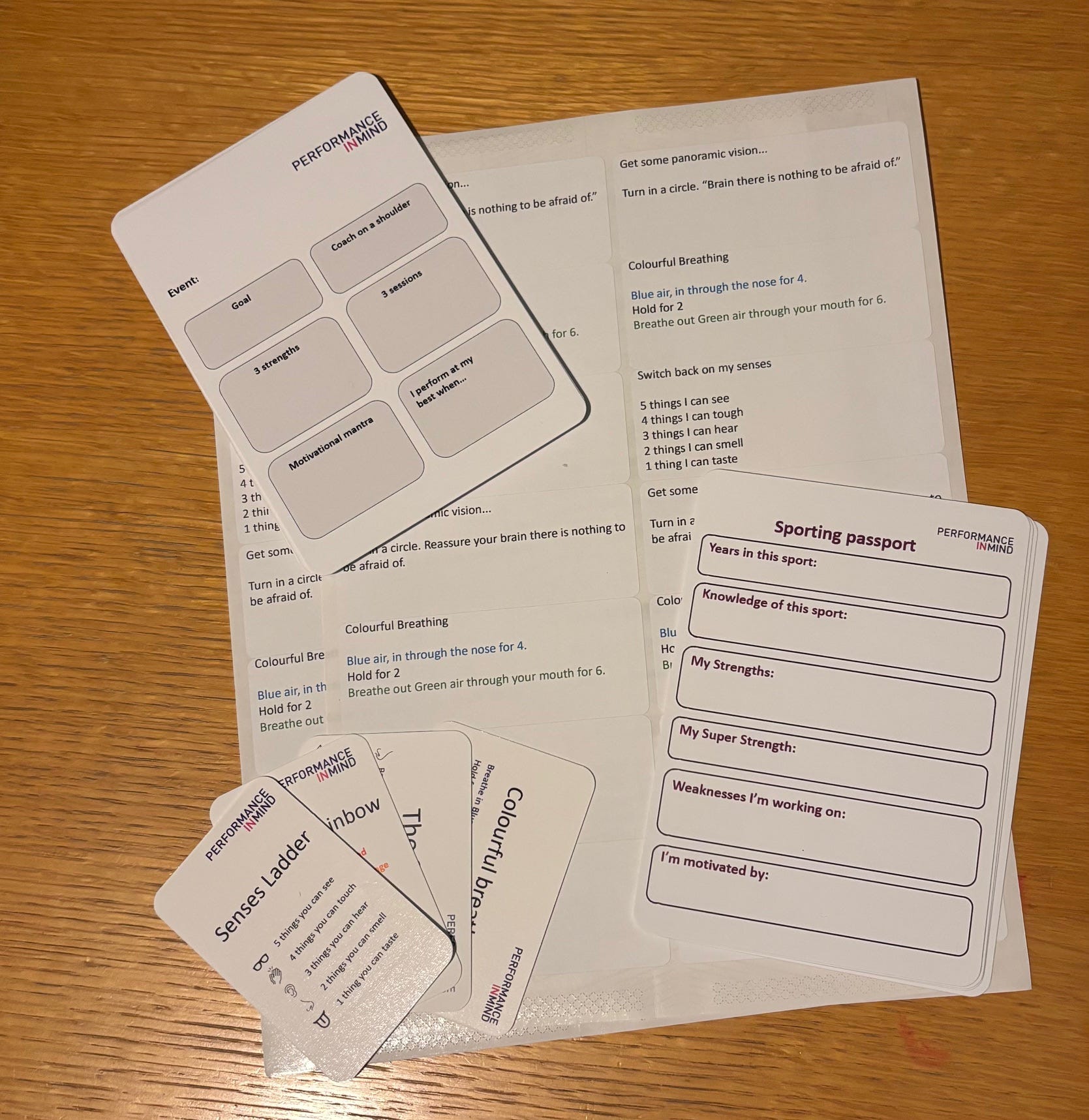
10 Confidence Boosting Cards to see you through a season of key matches or races
2 sheets of Stickers for Success to go over all your bottles, kit bag, phone case
2 Calming cards
2 Breathing Cards
4 communication passports to give to coaches or PE teachers you train with
They cost £20 (including UK postage and packaging) and can be bought here:
Tool of the month: Inputs
Even at the highest pinnacle of their career; competing at the Olympics or Paralympics, athletes who are the absolute best in their country may feel like they have failed if they don’t win a medal. And yet there are likely to be over 50 athletes competing for that medal. They made the games, they could have had an experience of a lifetime, but if they didn’t get a medal they see it negatively. So how do we help athletes see all the ways that their efforts are successful.
We can split measures of success into outputs and inputs.
Outputs: There are outputs with metrics that are super easy to measure; what speed / height / distance did I go / jump / throw and the did I get a medal. But there are other important outputs;
Did I make any new friends?
Do I have some good stories to tell?
Did I inspire anyone?
Did I get some cool kit?
Did I master a skill I’ve been working on?
Did I make anyone else’s day better
All fab - but rarely measured.
Inputs:
What behaviours did I use?
How much effort did I put in?
Did I overcome my threat system when it wanted to stifle my ambitions
Did I chunk down my efforts and follow my task based goals
Did I prepare fully?
Did I use all my mental skills at the right time?
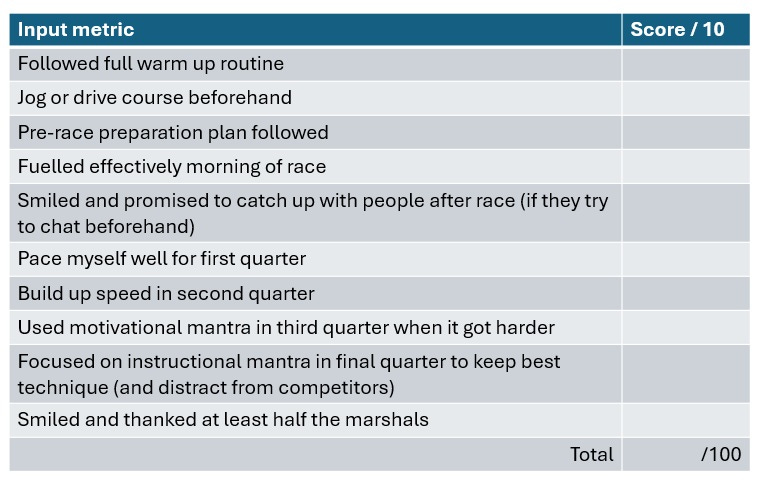
If we measure the inputs and some of the more important outputs (not the speed / height / place ones but the metrics that actually matter) than we can get real joy from our sport. Here is an example for a runner:
A bonus life psych tool for the new year
A Ta Ta Jar. Some call this a jar of joy (watch Liz O’Riordan’s amazing Ted talk on the subject here:
but with so many high achievers focusing on To Do lists I love the idea of turning the To Do concept on its head and creating a ‘Ta Da’ Jar where an achievement for each day gets put into the jar. The achievements don’t need to be big; but they do need to be something that moved you forward a little bit; in terms of moving you closer to a goal, feeling a little more content, bought a smile to your face, helped you support someone else or, on the trickiest of days, just got through it!
Book recommendation: 31 days by Allie Bailey.
I loved Allie’s first book (There is no wall – review here) and invited her onto our podcast in September right after her Dragons Back race. It was an emotional episode. You can listen here. On the episode she mentioned she was working on her second book and now it is coming out on the 5th Feb (you can pre-order on Amazon here)
I measure a book by how many sentences get highlighted, how many pages have post it notes sticking out and whether I’m inspired to incorporate anything from it into my psychology practice. This book is now pretty fluorescent, post-it-ed to the max and I have a new worksheet ready to use full of bricks to measure consistency!
Bailey’s book gives you 31 days of reading / exercises to get your head in a great place to have a great approach to running (though would work just as well in any individual sport). Within each chapter (or day) she has a really good structure that makes it super easy to read: Focus (the key point), an example (when Allie or a coaching client experienced this), the work (that you’ll need to do to master this area). After every 5 days there are worksheets to complete.
Each chapter ends with a sentence summary that is basically a cute mantra:
“The only definition of success that is important is your own”
“Small and varied consistencies lead to big results”
“If you are going to do hard things, then you need to accept that you are going to feel hard things.”
Favourite days are Other People’s Trolleys (Day 19) which will totally change your perspective on comparison and social perfectionism, the focus on values (Day 8) and Day 2 where how she breaks down the brain so neatly into three aims: To seek pleasure, to avoid pain, to conserve energy. When we think about our motivations in this way it allows us to beat ourselves up less but also set ourselves up better for success. Overall though 31 Days is all about “Doing the Work.” And not just once but continually. Bailey sums it up with this fab quote: “We become the person we want to be by doing. Not wishing.” This book helps you do.
Have an amazing 2026.
Josie x